
From 100 kilograms to 1.7 tonnes: sample size and Clogau’s gold
Gold can be distributed unevenly through rock, with a small number of grains carrying a large share of a sample’s gold. In many sampling studies, particles larger than about a tenth of a millimetre are described as coarse gold. Their presence or absence can make two samples taken close together give quite different results. This contributes to what the industry calls the nugget effect.
Collecting more material can help, alongside careful sampling and preparation. A larger sample can reduce the influence of individual grains, while a recorded location ties each result back to the ground it came from. Size alone does not guarantee a representative result.
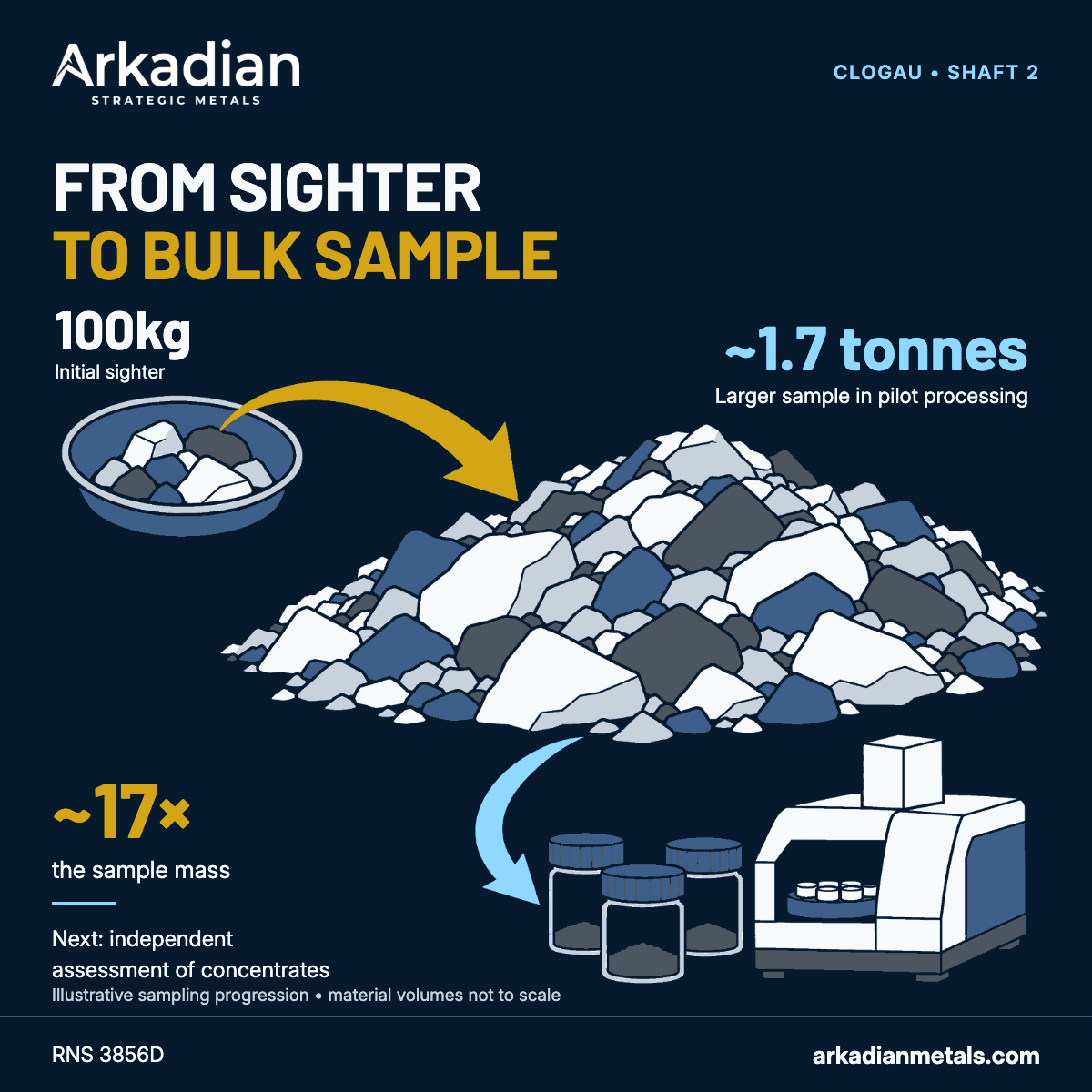
At Shaft 2, the 100kg sighter sample returned 0.81 grams of gold, an encouraging first look. The bulk sample now in our pilot plant is about 1.7 tonnes from the same area of historic floor, roughly seventeen times the sample mass. Its concentrates will go to an independent laboratory for assessment and gold recovery.
We are keeping results linked to their sources elsewhere at Clogau too. Material from other underground locations is being kept in separate batches, and sample locations on the waste tip are being recorded, so that each result can be related to its source.
For anyone following Clogau, the larger sample will help assess gold recovery from a much greater quantity of Shaft 2 floor material. That evidence will guide how we approach the further material around the shaft.
#ArkadianStrategicMetals #WelshGold #ResponsibleExploration